Damp in Menorca homes: how to spot it before you buy

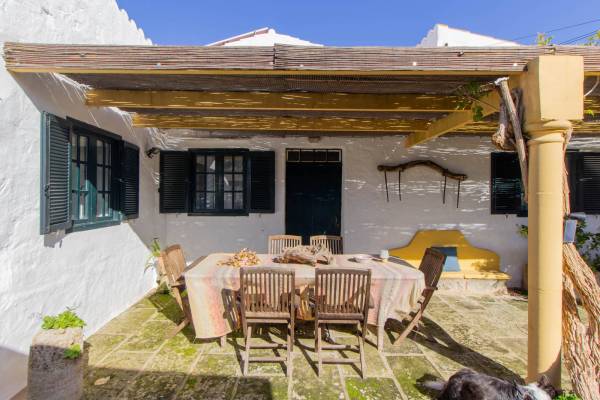 Damp in Menorca homes
Damp is one of the most common defects in Menorca homes, and one of the easiest to miss if you view a property in summer. The island has an average annual relative humidity of 72% and most of its rain falls in autumn, so November is the best month to see how a house really behaves. This guide explains the different types of damp, how to recognise them during a viewing and what to do if the home you like is affected.
Why are Menorca homes prone to damp?
Because of the combination of a maritime climate, wind and highly porous traditional building materials such as marés stone. According to AEMET's climate normals for Menorca Airport (1981-2010), average relative humidity is 72% over the year and rises to 75-77% between October and January. November is the wettest month, with an average of 88 mm out of an annual total of 546 mm.
Three local factors add to this:
- Marés stone: a calcareous sandstone and Menorca's traditional building stone. It is highly absorbent and needs to "breathe"; if it is covered with cement render or plastic paints, water gets trapped inside the wall.
- The tramontana: the north wind drives rain against exposed façades and roofs, especially on the north coast, which encourages leaks.
- Homes left closed: many second homes go months without ventilation or heating, and damp builds up unnoticed during that time.
What types of damp can a property have?
There are three main types: rising damp, penetrating damp and condensation. Each has a different cause and therefore a different solution. Identifying which one you are dealing with is the first step to judging how serious it is.
| Type | Cause | Where it appears | Typical sign |
|---|---|---|---|
| Rising damp | Ground water rising up through the walls | Ground floor, up to roughly 1 metre high | Horizontal tide mark low on the wall, salt deposits, damaged skirting boards |
| Penetrating damp | Rainwater entering through roofs, terraces, façades or window frames | Ceilings, under terraces, around windows | Stains that grow after rain, drips, blistered paint |
| Condensation | Indoor water vapour condensing on cold surfaces | Corners, behind wardrobes, bathrooms, north-facing bedrooms | Black mould spots, misted windows, musty smell |
Why is November a good time to view a property?
Because after the first autumn rains and the first days of tramontana, damp problems can be seen, smelt and measured. In summer relative humidity drops to 63-65% and July averages just 3 mm of rain: walls are dry, windows are open, and a house with problems can look perfect. If you can, view the property a day or two after it has rained.
What signs of damp should you look for during a viewing?
The clearest signs are stains and salt deposits low on the walls, blistered paint, mould in corners and a musty smell. Take your time checking these points:
- Base of the walls: dark patches, white efflorescence (salt) or render coming away.
- Ceilings and areas under terraces: rings, yellowish stains or flaking plaster.
- Inside built-in wardrobes: open the doors and smell; this is where condensation hides best.
- Window and door frames: swollen or rotten wood, black seals and rusty frames.
- Floors and skirting boards: loose tiles or detached skirting on the ground floor.
- Fresh paint in specific areas: it does not always hide a problem, but it is worth asking why it was painted.
A practical tip: bring a digital hygrometer. Spain's Regulation on Thermal Installations in Buildings (RITE) sets an indoor design relative humidity of 40-50% in winter and states that it should always stay below 65% to avoid condensation. If a closed-up home is clearly above that level, it is worth finding out why.
What should you ask the seller?
The key questions are how long the house stays closed, what treatments it has had and when the roof was last waterproofed. The answers will give you context and, if there are invoices or guarantees, peace of mind:
- How many months a year is the property closed, and how is it ventilated during that time?
- Has it had any damp treatment? Are there invoices or a guarantee?
- When were the roof or terrace last inspected or waterproofed?
- Does the house have heating, a dehumidifier or a ventilation system?
- Have there been leaks or water damage in recent years?
Can damp be fixed in a marés stone house?
Yes, in most cases, as long as the cause is correctly identified and materials compatible with the stone are used. The usual solutions for each type of damp are:
- Rising damp: injected chemical damp-proof courses, perimeter drainage or electro-osmosis systems, combined with breathable lime renders instead of cement.
- Penetrating damp: inspecting and waterproofing roofs and terraces, sealing window frames and maintaining gutters and downpipes.
- Condensation: improving ventilation, insulation and heating, and using dehumidifiers while the house is closed.
Before signing the deposit contract (contrato de arras), the safest approach is to have an architect or building surveyor inspect the property and produce a report with a diagnosis and an estimated repair cost.
How does damp affect the purchase price?
A properly diagnosed damp problem does not have to rule a property out, but it should be taken into account in the negotiation. With a technical report and a repair quote on the table, buyer and seller can negotiate on objective grounds: a price adjustment, repairs carried out by the seller beforehand or an agreed works schedule. What you never want is to discover the problem after the purchase.
Frequently asked questions
Is it normal for a house in Menorca to have some damp?
A certain level of ambient humidity is normal in a maritime climate like Menorca's. Stains, mould or salt deposits on the walls are not normal and point to a problem that should be diagnosed.
When is the best time to view a property to check for damp?
In autumn and winter, ideally a day or two after rain. November is Menorca's wettest month, so problems are more visible.
Can rising damp be eliminated in a marés stone house?
Yes. It is treated with injected barriers, drainage or electro-osmosis, along with lime renders that let the stone breathe. The key is not to cover marés with cement or plastic paints.
What indoor humidity level is appropriate in a home?
The RITE sets an indoor relative humidity of 40-50% in winter and 45-60% in summer, and recommends always keeping it below 65% to avoid condensation.
Can damp affect the purchase price?
Yes. With a technical report and a repair quote, the buyer can negotiate a price adjustment or ask the seller to carry out the repairs before the sale.
Spotting damp early saves you surprises and gives you leverage in the negotiation. At Fincas Venalis we know how homes are built in Menorca, and we accompany you on every viewing so you know what to look for, what to ask and when to request a technical inspection before you buy. Browse the properties we have for sale at venalismenorca.com/en/.





All prices and details are subject to change without prior notice, including properties no longer being available. We have endeavored to make sure all the information is correct, however Portal Menorca cannot be held responsible for any errors or omissions.

Buy
Buy
Location
- Alaior
- Ciutadella de Menorca
- Es Castell
- Es Mercadal
- Es Migjorn Gran
- Ferreries
- Maó - Mahón
- Sant Lluís
Zone
- South coast
- North coast
- Cities and towns
- Inside

Official Register of Real Estate Agents (ROAIIB) GOIBE744113/2024
Legal notice Privacy policy Cookies policy Cookie settings © Fincas Venalis 2026